Personal curriculums have been trending on social media lately. Lists of aspirational readings and projects to have some intentionality over a span of time in learning something new or going deeper into a particular topic. It’s a little bit like taking yourself back to school and giving yourself some structure and a timeline to get through a certain amount of material. You can give yourself “homework” and “assignments” and share what you’re working on with others.
I wanted to extend this trend to my artistic practice and provide a short list of influential texts that have informed how and why I make artwork. As opposed to an aspirational list, this is more of a “bibliography”, a way of me citing my creative sources through texts I’ve read. I’d like to treat this list as a resource for others, a little insight into the inner workings and also treat it as a kind of living document for myself to reference, consider, add to etc. Enjoy this list, I hope there are some good recommendations or otherwise inspire you to do your own curriculum!
** While my curriculum is text heavy, you could also assemble images of artwork that have influenced you, albums, museums, etc. There’s no limit to how you document how you became the artist you are now.
In no particular order:
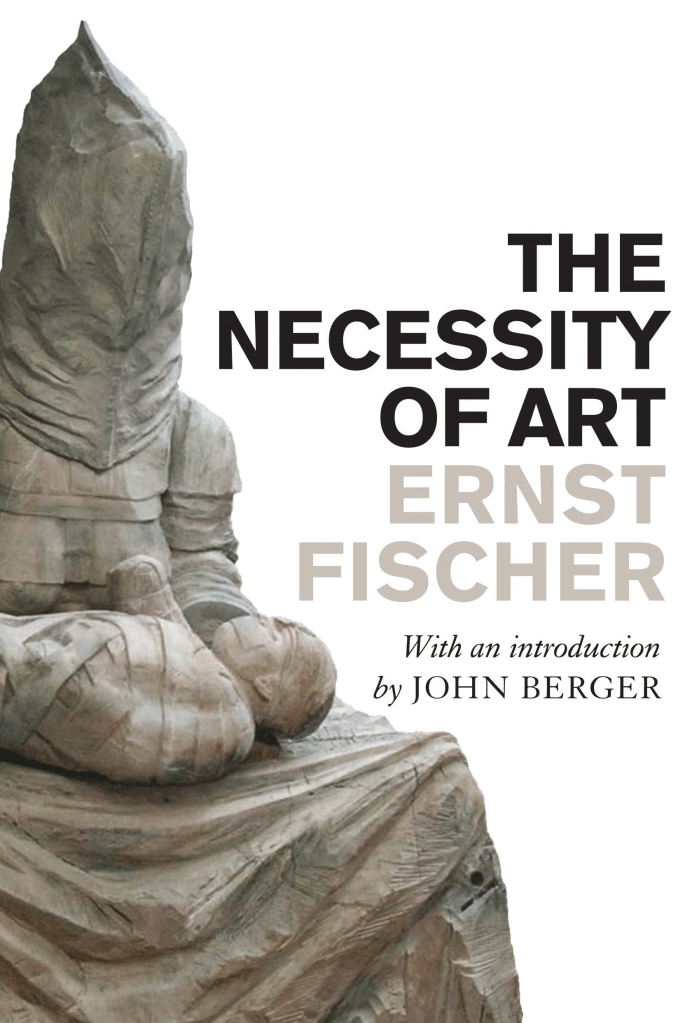
The Necessity of Art is a beautifully written meditation on art’s importance in viewing the world in which we live. In this wide-ranging and erudite exploration of literary and fine art, Fischer looks at the relationship between the creative imagination and social reality, arguing that truthful art must both reflect existence in all its flaws and imperfections, and help show how change and improvement might be brought about.
With his emphasis on the individual’s need to engage with society, his rejection of rampant consumerism and hypertechnology, and his indomitable optimism, this radical, affirmative and humane vision of the artistic endeavor remains as timely today as when it was first published sixty years ago. (https://www.amazon.co.uk/Necessity-Art-Ernst-Fischer/dp/1844675939)
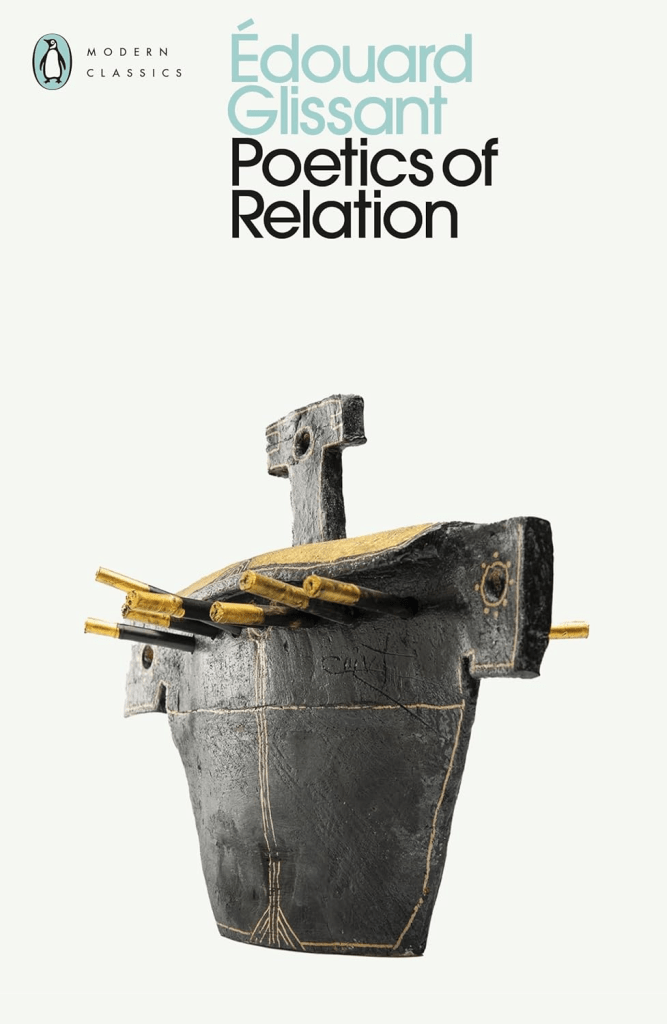
(My doctoral dissertation centers around Glissant’s writing and so naturally this has made the list).
In Poetics of Relation, Édouard Glissant turns the Caribbean of his birth into an energetic, multi-layered vision of a world in transformation. We come to see that relation in all its senses – telling, listening, connecting, and the parallel consciousness of self and surroundings – is the key to revolutionising mentalities and societies. We are not rooted, but ever-changing; we have a right to difference, wherever we are. Blending dreamlike prose with philosophical brilliance, this unique exploration of language, colonialism, slavery and freedom narrates an Antillean identity, but also that of the whole world, where ‘the poetics of Relation senses, assumes, opens, gathers, scatters, continues, and transforms.’
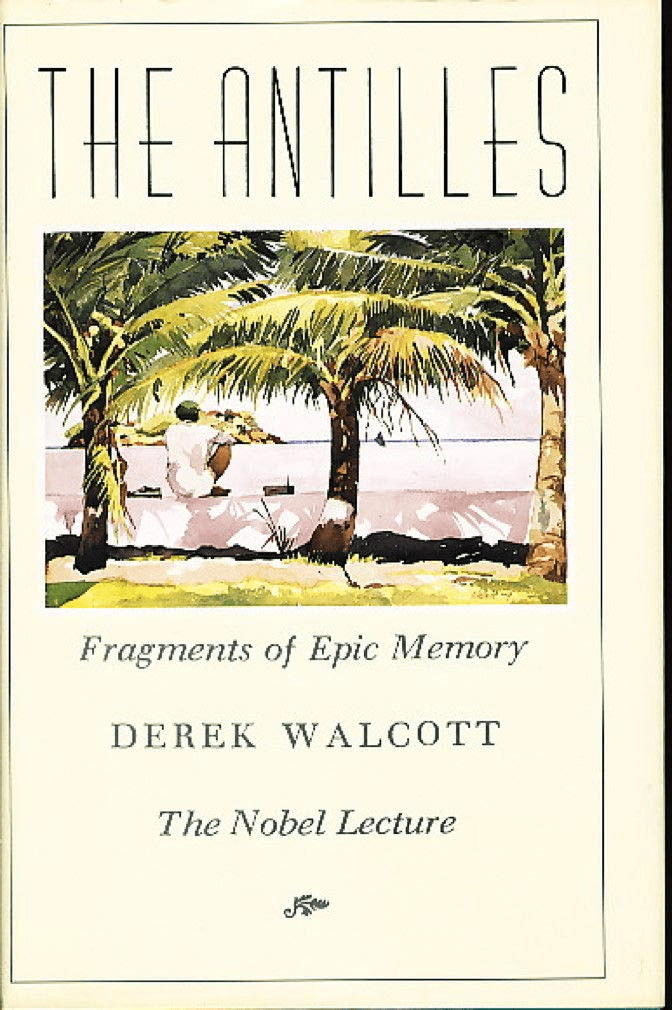
(I think this should be required reading for Caribbean students. I particularly like the analogy of “break a vase).
Derek Walcott was awarded the Nobel Prize in Literature on December 10, 1992. His Nobel lecture is a stirring evocation of the multivalent wholeness of the culture of the Antilles, forged out of a violent history against a land- and seascape of immemorial dimensions. “Caribbean culture is not evolving but already shaped,” writes Walcott. “Its proportions are not to be measured by the traveller or the exile, but by its own citizenry and architecture.” He finds the image of this culture in the city of Port of Spain, Trinidad, “mongrelized, polyglot, a ferment without a history, like heaven.” And watching a group of East Indian Trinidadians reenact the Hindu epic the Ramayana in the small village of Felicity, he meditates on the sacred celebration of joy, the rehearsal of collective memory, that is the very essence of human experience, beyond history. Walcott’s lecture is a powerful reenvisionmg of the themes that have energized and informed his poetry.
https://artreview.com/november-2015-feature-timothy-morton-charisma-causality/
What if art isn’t mere decoration, a human‐only affair—but a force that reveals how things really work? Drawing on the provocations of object-oriented ontology (OOO), Morton turns our assumptions about art, causality and charisma upside down. He argues that art is causality in action: an artwork doesn’t just represent, it emits; it is a “magic” that dances between appearance and being, agency and effect. Revisiting ideas of Weber’s charisma, the paranormal, entanglement and the metaphysics of presence, Morton presents art as the frontier where humans and non-humans, seen and unseen, collide. The article invites you on a short but mind-bending journey from the late nineteenth century into our Anthropocene predicament—and challenges what we think we know about creativity, force and the “real.”
If you are ready to imagine that a painting, a whale-song or even a snow-globe might carry more than meets the eye—then this is your invitation.
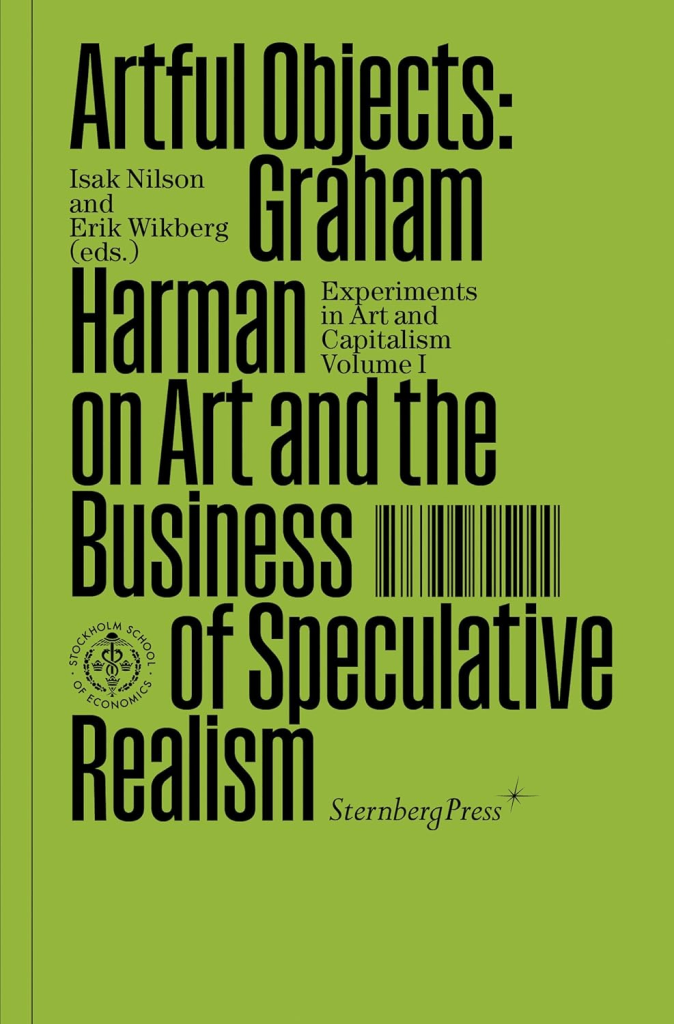
(There are a few books by Graham Harman that draw from – this one is one of his books most directly oriented towards art but also the strain of philosophy I’m absorbed by, speculative realism).
A lecture by the originator of object-oriented philosophy, delivered on the occasion of the Sculpture after Sculpture exhibition at Moderna Museet, Stockholm.
Can objects be traumatized? How does the commercial value of an art object relate to its aesthetic qualities? How do objects interact? These are some of the questions addressed by Graham Harman, the originator of object-oriented philosophy and a central figure of the Speculative Realism school of thought in contemporary philosophy. This book includes Graham Harman’s lecture “What Is an Object?” delivered at Moderna Museet in Stockholm, on the occasion of the exhibition “Sculpture after Sculpture,” with Jeff Koons, Charles Ray, and Katharina Fritsch—artists, who have expanded the notion of the object in art and society at large.
In his lecture, Harman gives a thorough exposition of the object from an ontological standpoint and puts forward a concept of the object that goes beyond reductionist orientations. He declares a philosophical approach bringing philosophy and the arts closely together, where objects are impenetrable to direct knowledge and paraphrase and instead must be approached obliquely and indirectly. The publication also includes a symposium in which thirteen questions to Graham Harman—among and in relation to the thirteen sculptures of the show—that were posed about the implications of object oriented philosophy for art, business administration, and philosophy.
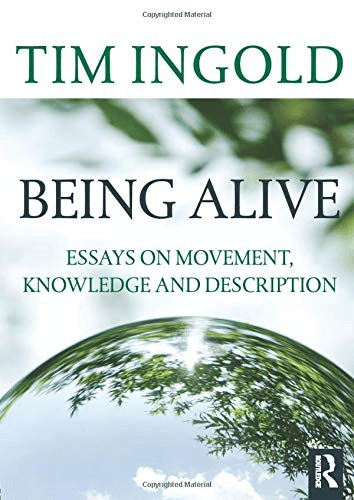
(Tim Ingold writes the books I wish I wrote)
Anthropology is a disciplined inquiry into the conditions and potentials of human life. Generations of theorists, however, have expunged life from their accounts, treating it as the mere output of patterns, codes, structures or systems variously defined as genetic or cultural, natural or social. Building on his classic work The Perception of the Environment, Tim Ingold sets out to restore life to where it should belong, at the heart of anthropological concern.
Being Alive ranges over such themes as the vitality of materials, what it means to make things, the perception and formation of the ground, the mingling of earth and sky in the weather-world, the experiences of light, sound and feeling, the role of storytelling in the integration of knowledge, and the potential of drawing to unite observation and description.
Our humanity, Ingold argues, does not come ready-made but is continually fashioned in our movements along ways of life. Starting from the idea of life as a process of wayfaring, Ingold presents a radically new understanding of movement, knowledge and description as dimensions not just of being in the world, but of being alive to what is going on there.
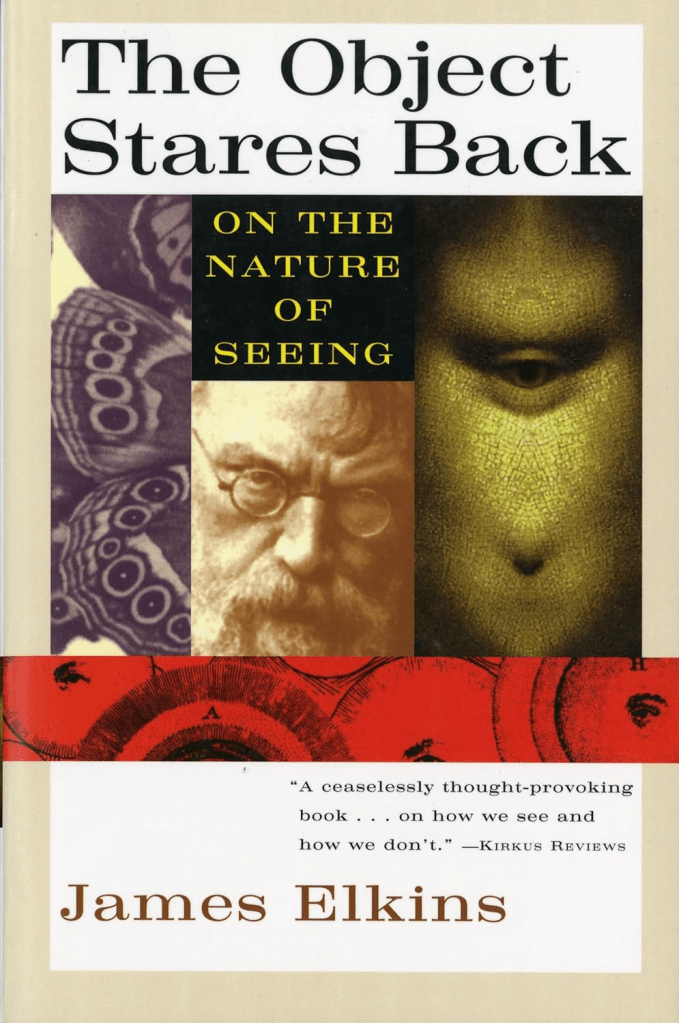
(James Elkins is a big influence as an art writer. He also wrote, “What Painting Is”, “Why Art Cannot Be Taught” and “Art Critiques: A Guide”. This is the text that got me me started thinking about object oriented ontology and speculative realism as a whole).
In this “remarkable tour de force” (Publishers Weekly) and “ceaselessly thought-provoking book” (Kirkus Reviews), art historian James Elkins marshals psychology, philosophy, science, and art history to show how seeing alters the thing seen and transforms the seer.
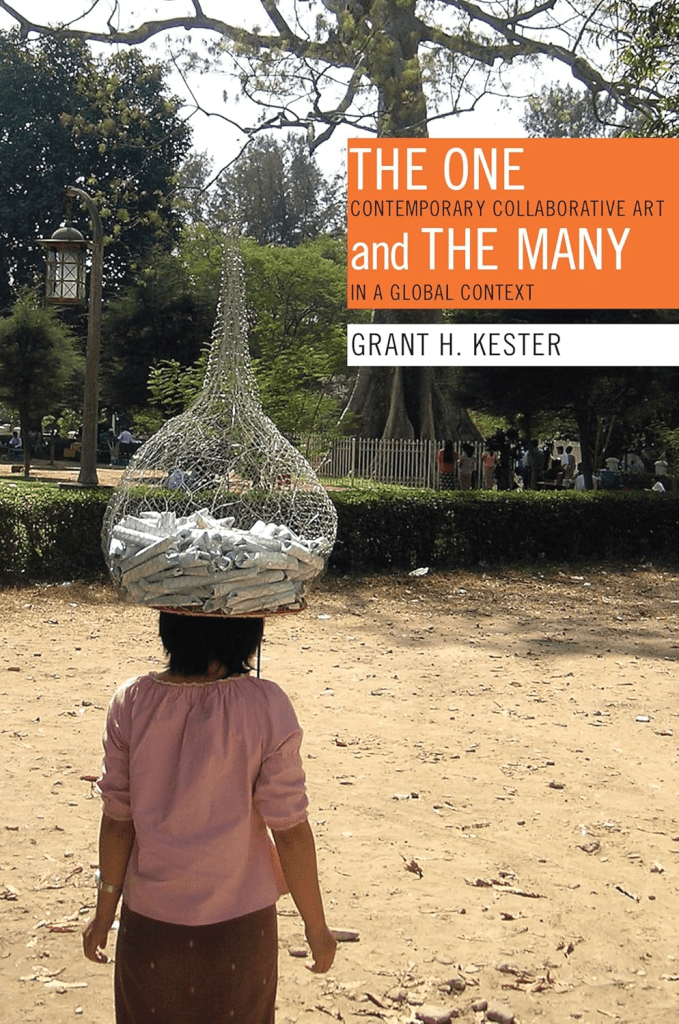
(This was an important text when I was doing my MFA thesis and dabbling in relational aesthetics).
Collaborative and collective art practices have proliferated around the world over the past fifteen years. In The One and the Many, Grant H. Kester provides an overview of the broader continuum of collaborative art, ranging from the work of artists and groups widely celebrated in the mainstream art world, such as Thomas Hirschhorn, Superflex, Francis Alÿs, and Santiago Sierra, to the less-publicized projects of groups, such as Park Fiction in Hamburg, Networking and Initiatives for Culture and the Arts in Myanmar, Ala Plastica in Argentina, Huit Facettes in Senegal, and Dialogue in central India. The work of these groups often overlaps with the activities of NGOs, activists, and urban planners. Kester argues that these parallels are symptomatic of an important transition in contemporary art practice, as conventional notions of aesthetic autonomy are being redefined and renegotiated. He describes a shift from a concept of art as something envisioned beforehand by the artist and placed before the viewer, to the concept of art as a process of reciprocal creative labor. The One and the Many presents a critical framework that addresses the new forms of agency and identity mobilized by the process of collaborative production.
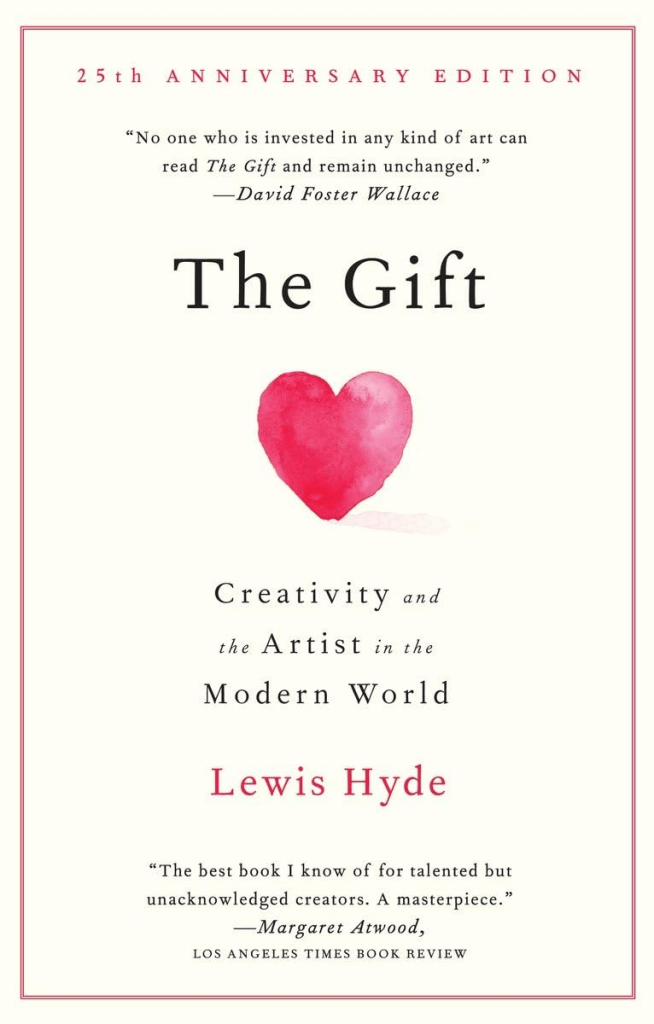
(Another essential book as I was writing my MFA thesis – very readable, I recommend all artists give it a read).
By now a modern classic, The Gift is a brilliantly orchestrated defense of the value of creativity and of its importance in a culture increasingly governed by money and overrun with commodities. This book is even more necessary today than when it first appeared.
An illuminating and transformative book, and completely original in its view of the world, The Gift is cherished by artists, writers, musicians, and thinkers. It is in itself a gift to all who discover the classic wisdom found in its pages.
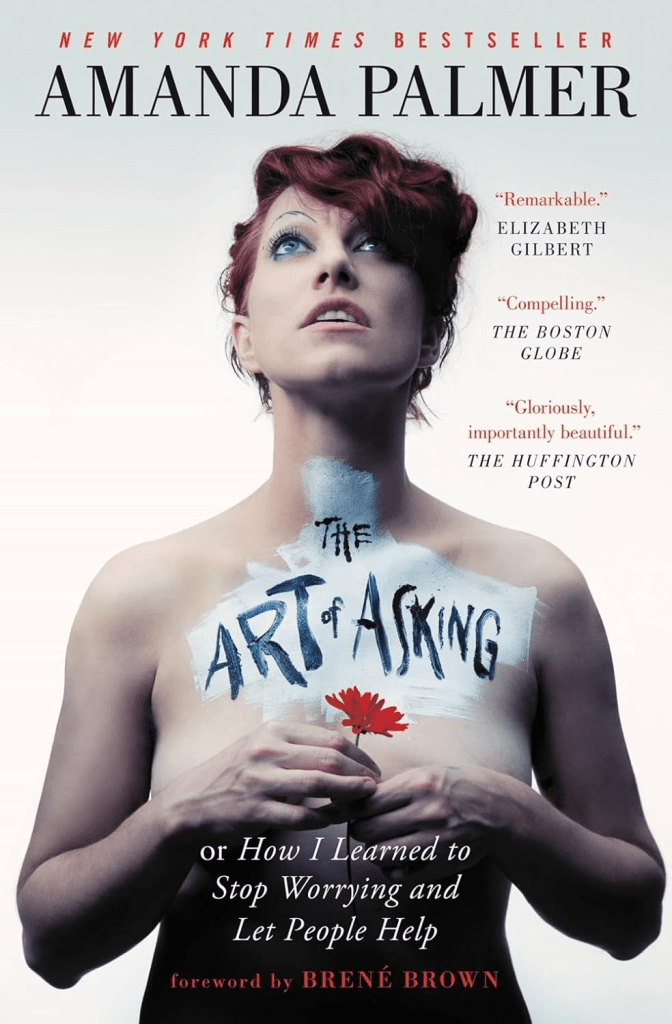
(Also drew from Amanda Palmer for master’s work. She is also how I started reading Brené Brown)
Rock star, crowdfunding pioneer, and TED speaker Amanda Palmer knows all about asking. Performing as a living statue in a wedding dress, she wordlessly asked thousands of passersby for their dollars. When she became a singer, songwriter, and musician, she was not afraid to ask her audience to support her as she surfed the crowd (and slept on their couches while touring). And when she left her record label to strike out on her own, she asked her fans to support her in making an album, leading to the world’s most successful music Kickstarter.
Even while Amanda is both celebrated and attacked for her fearlessness in asking for help, she finds that there are important things she cannot ask for-as a musician, as a friend, and as a wife. She learns that she isn’t alone in this, that so many people are afraid to ask for help, and it paralyzes their lives and relationships. In this groundbreaking book, she explores these barriers in her own life and in the lives of those around her, and discovers the emotional, philosophical, and practical aspects of The Art of Asking.
Part manifesto, part revelation, this is the story of an artist struggling with the new rules of exchange in the twenty-first century, both on and off the Internet. The Art of Asking will inspire readers to rethink their own ideas about asking, giving, art, and love.
 Asher Mains