Puzzling
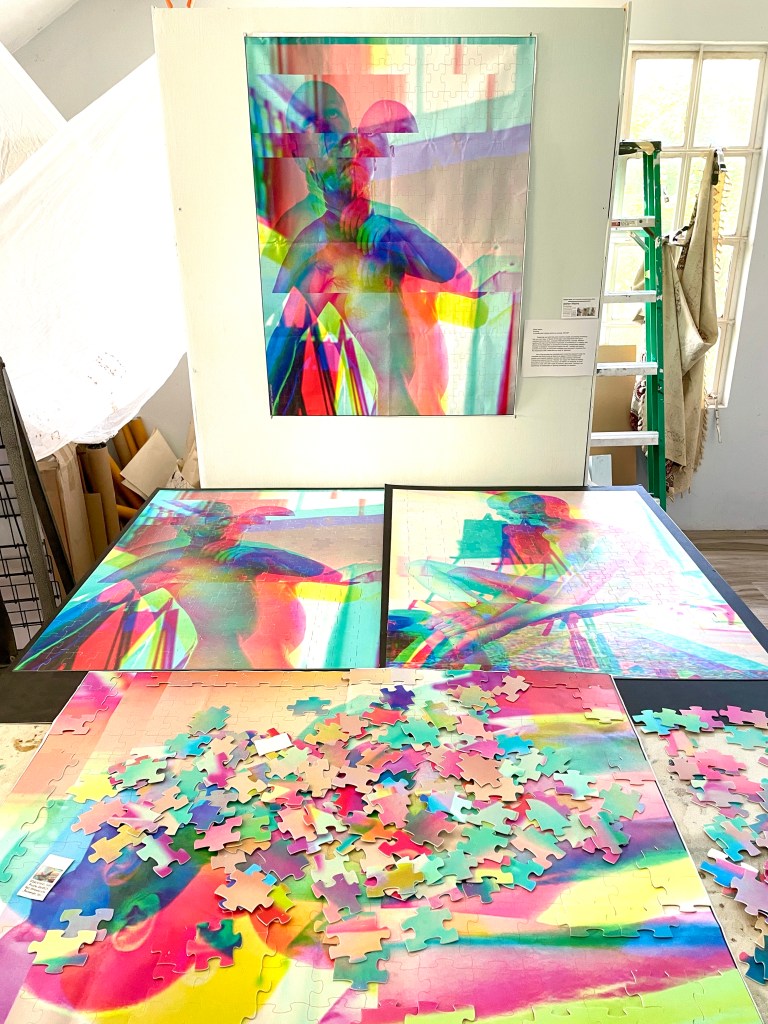
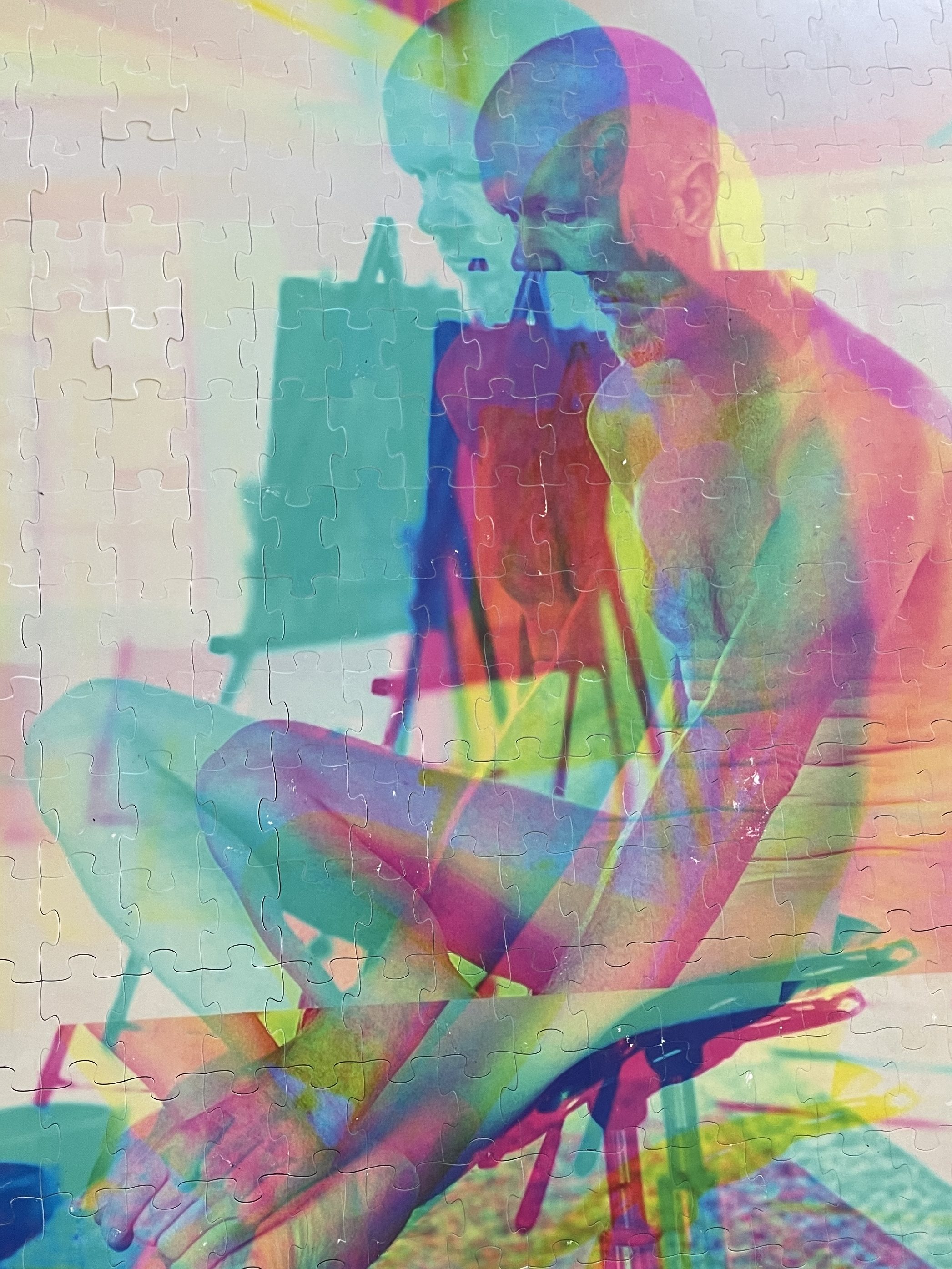
3 puzzles and 3 photo prints on canvas, 30”x40”
Dreaming well with this work involves visually processing something that you can’t see. In March of this year I was diagnosed with type II diabetes and since then, everyday feels like solving a puzzle. Whether dealing with high and low levels of glucose, or wondering if I’m feeling side effects of the medication or symptoms of having undiagnosed diabetes – changes in eyesight, unexplained weight loss etc. I started with taking pictures of my body to document changes over time and it morphed into this expression that it feels like my body is “glitching”.
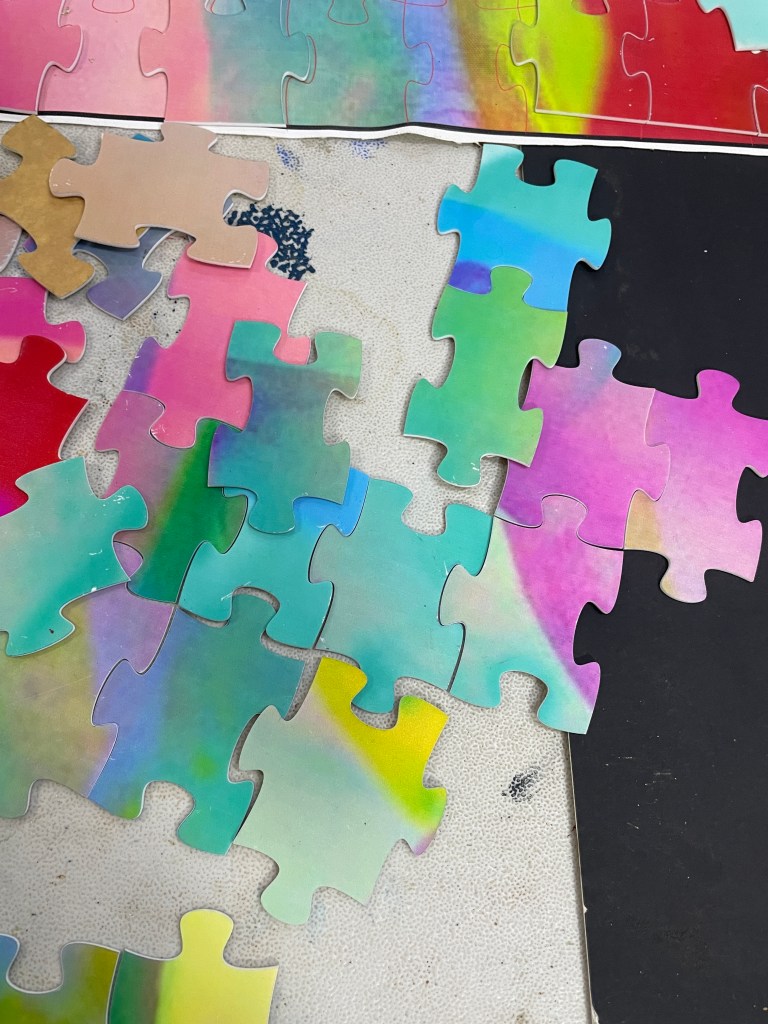
Two of the puzzles are complete and I invite the viewers to help me complete the third puzzle as there is an aspect of this condition that pushes one towards healthier choices and also seeking community. Finding food options that are “friendly” (no sugar, low carbs) or making sure there is some activity in the day, it is helpful, for example, to have someone to walk with after meals to ensure it gets done. Puzzling is an opportunity to collaborate on figuring something out together.
Further…
There are a few philosophical strains that this work is suspended in. I think of Heidegger’s notion that we don’t notice or regard things in the world until they are broken or don’t function correctly. We don’t consider the floor of a room unless it is an obstacle or somehow doesn’t have “floor-like” qualities. We don’t consider the parts of a tool until it doesn’t work right or we need to fix it. In this work, there are lots of considerations when puzzling through this health condition that moved things from “ready at hand” to “present at hand” or having to give the parts, the body, attention that it wouldn’t require if it was working as it should.
In reading A Thousand Plateaus, Deleuze and Guattari explore thoughts on becoming which, for me, calls into question, what am I becoming? Am I someone who, after realizing something is wrong, becomes better? Can one become healthy, or are there just different states of what health is or can be achieved? Aside from becoming, Deleuze and Guattari look at the concept of “the stutter” or something that happens to bump convention off its track. In their work they explore the stutter as a creative act, something that can unlock new territory and ultimately lend one to new ways of being.
A major part of the aesthetics of this work involves the philosophy and aesthetics of the glitch. Of course, in my work it is in reference to the “glitch” of my body not working correctly. The aesthetic element expands on this as it pulls in other implications. This summary of glitch philosophy and art from https://www.destroyallcircuits.com/blogs/news/the-philosophy-of-glitch-art-and-glitch-thinking : The Philosophy and Practice of Glitch Thinking: A Comprehensive Overview, is apt:
“Glitch thinking is a philosophical and artistic approach that embraces errors, creates errors, malfunctions, and unexpected outcomes as sources of creativity and insight. It challenges traditional notions of perfection, control, and intended use in technology and art.”
Particularly, for this work, as well as some elements of my painting practice: Embracing imperfection, revealing the system, aesthetics of failure, randomness and chance, redefining control, and ethics of imperfection.

 Asher Mains