***AI Summary*** In March, the writer participated in an artist residency in Santa Rosa de Cuevo, Bolivia, curated by Mimmo Roselli, which brought together nearly 100 international creatives to collaborate with the Guarani people. Shifting from portraiture, the artist explored net-making as a symbolic and material practice, inspired by Homer’s Odyssey and Derek Walcott’s Omeros. The project became a collaborative experience involving local youth and other artists, blending Caribbean and Bolivian cultural elements. The resulting net incorporated local materials and references to land, sea, and sacrifice, functioning as both a physical artwork and a narrative journey connecting ancient myth with contemporary community.
“But after you have killed these suitors in your own palace,
either by treachery, or openly with the sharp bronze,
then you must take up your well-shaped oar and go on a journey
until you come where there are men living who know nothing
of the sea, and who eat food that is not mixed with salt, who never
have known ships whose cheeks are painted purple, who never
have known well-shaped oars, which act for ships as wings do.
And I will tell you a very clear proof, and you cannot miss it.
When, as you walk, some other wayfarer happens to meet you,
and says you carry a winnow-fan on your bright shoulder,
then you must plant your well-shaped oar in the ground, and render
ceremonious sacrifice to the lord Poseidon.” (Lattimore, 11. 119–130)
Homer. The Odyssey. Translated by Richmond Lattimore, Harper & Row, 1967.
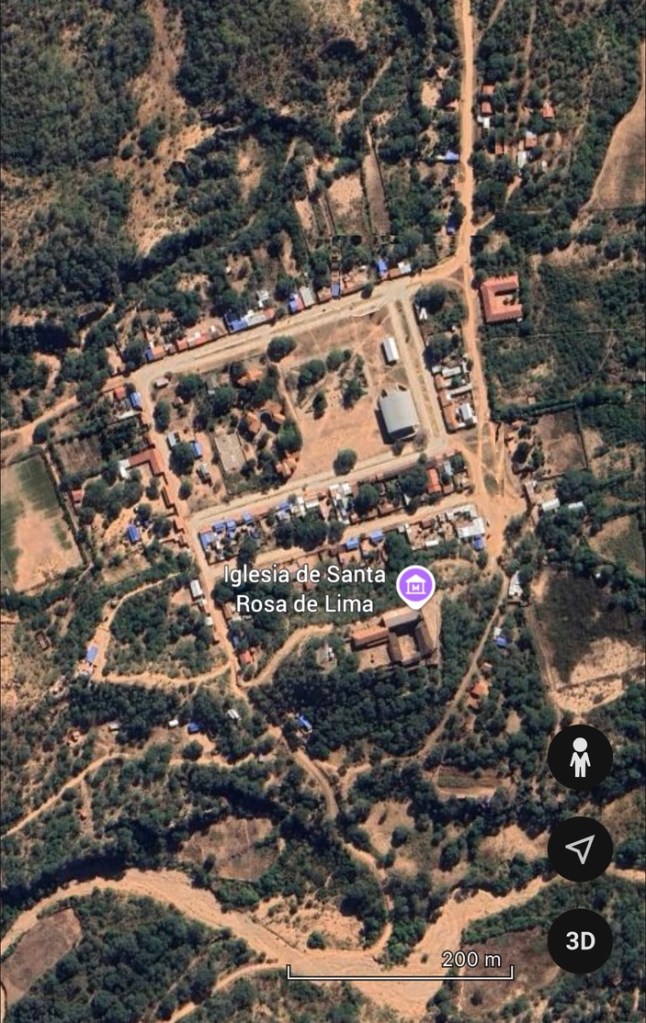
In March of this year, I was honored to be invited once again to Santa Rosa de Cuevo, in Bolivia’s Chaco region, for an artist residency. This year, Mimmo Roselli curated a diverse, international group of about 94 musicians, poets, actors, artists, and other creatives to spend time with the Guarani people, for two weeks, creating contemporary art while incorporating local knowledge and traditions.
I participated in Mimmo’s first residency there in 2016, during which I used local materials to paint portraits of some of the young students. The goal this time was similar: to engage young people with contemporary art, using the materials and objects readily available in the community.
I wanted to work on something different than portraits for this residency and have had net-making on my mind – particularly because there is a rich weaving tradition in Bolivia and thread and twine are available. Coming from the Caribbean to a landlocked country, I felt like net-making would be an interesting synthesis of process and materials.
I had recently read a portion of Homer’s Odyssey, particularly in reference to reading Derek Walcott’s Omeros, about Odysseus getting instructions for his atoning sacrifice to Poseidon (see quote at beginning of the post). I liked this idea that an object can change because you have moved or traveled with it. Odysseus had to walk with his (well-shaped) oar until people didn’t recognise it as an oar anymore, but a winnowing fan. As I started the net, I was telling the kids it was “la red para pescados” or a fishing net. Most of the teens and children what approach it can call it “la malla” or the mesh. While the semantic difference is negligible, the surface level reference to Odysseus’ task of traveling with an object until people called it something different resonated.
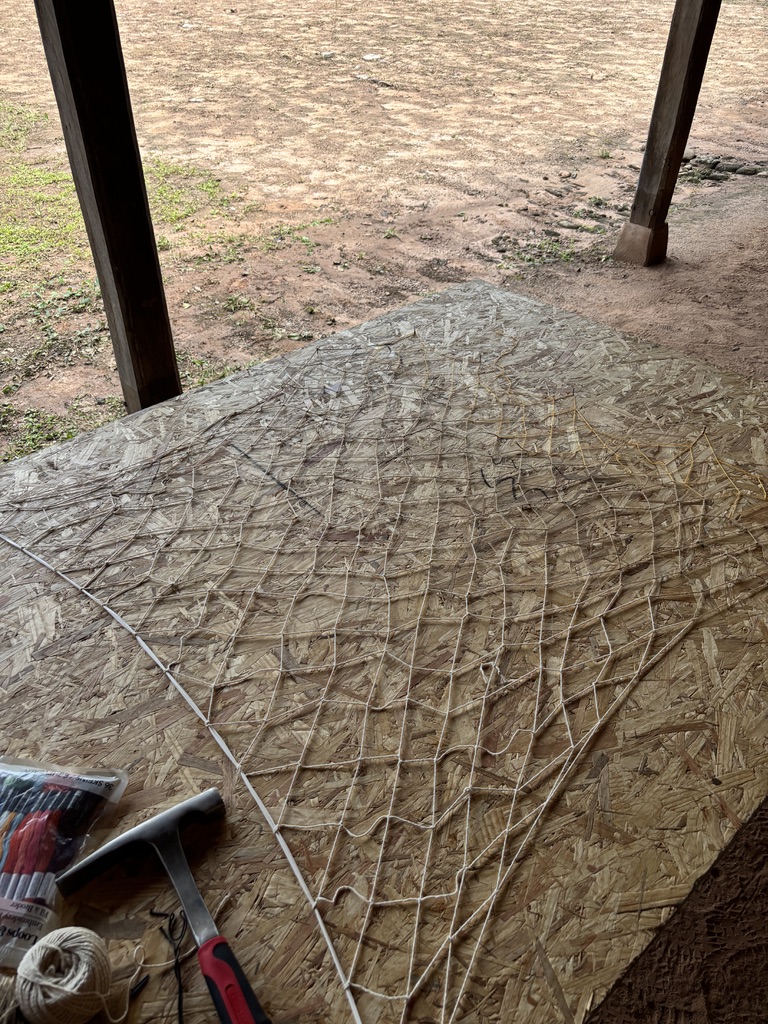
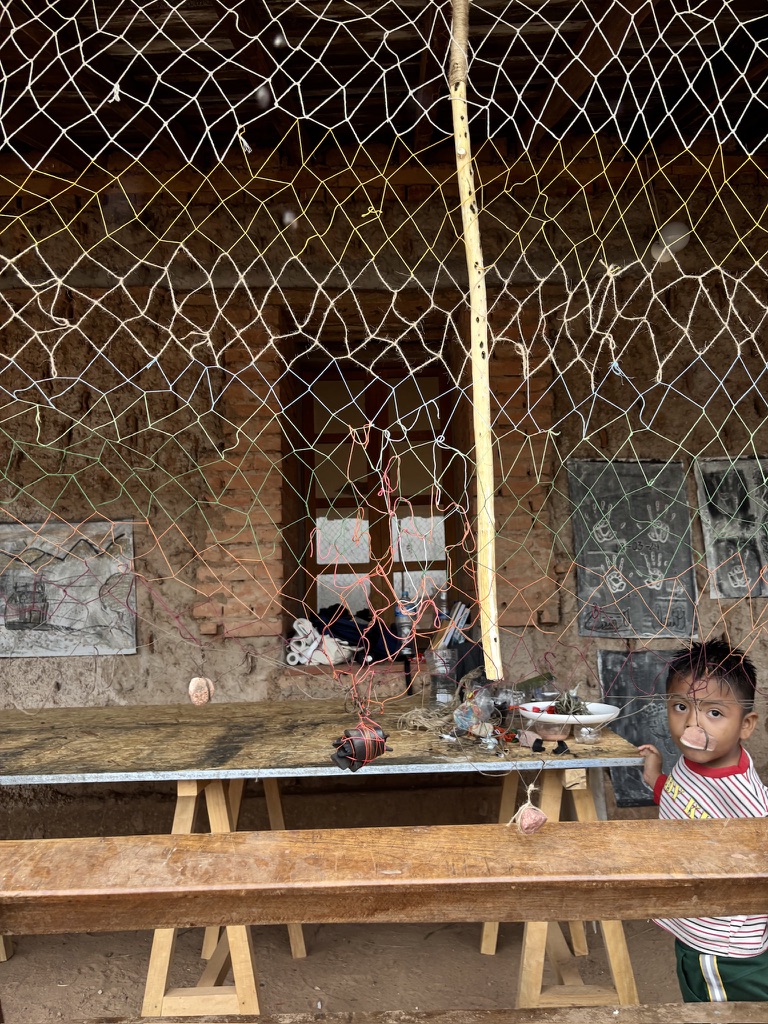
While making the net, there were interesting interventions from other artists as well as people in the community. Conversations about Homer, Walcott, the Odyssey, the Mediterranean, the Caribbean, and Bolivia’s loss of access to the ocean in 1879 after a war with Chile. One of the other artists was from an island off of Italy and he made a “fisherman’s tool” for me to aid in the net-making. There was a local guy who fished and knew about nets who showed me the type of knots he used to tie his nets. I had set up a net for the young people to make along with me, making the whole experience very collaborative and conversation inducing.
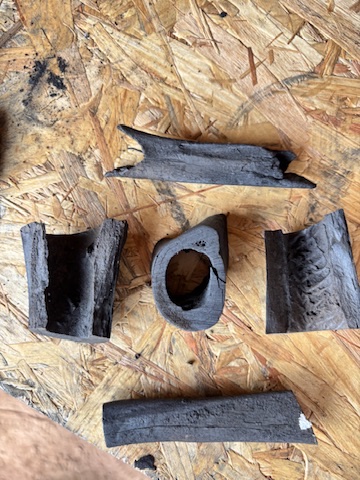
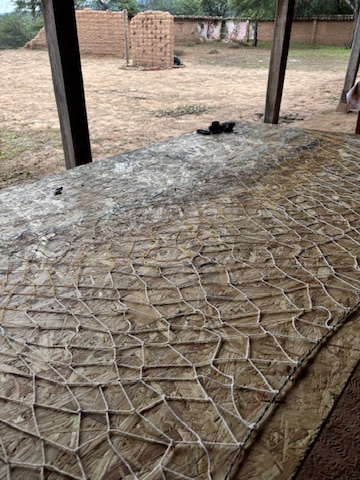
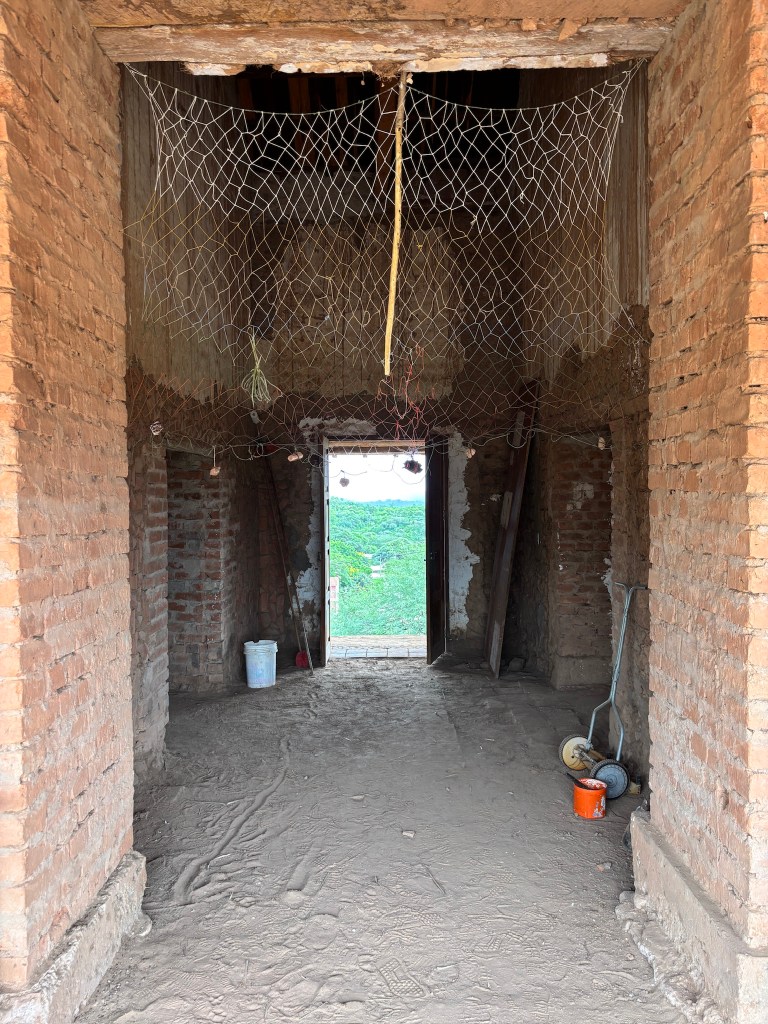
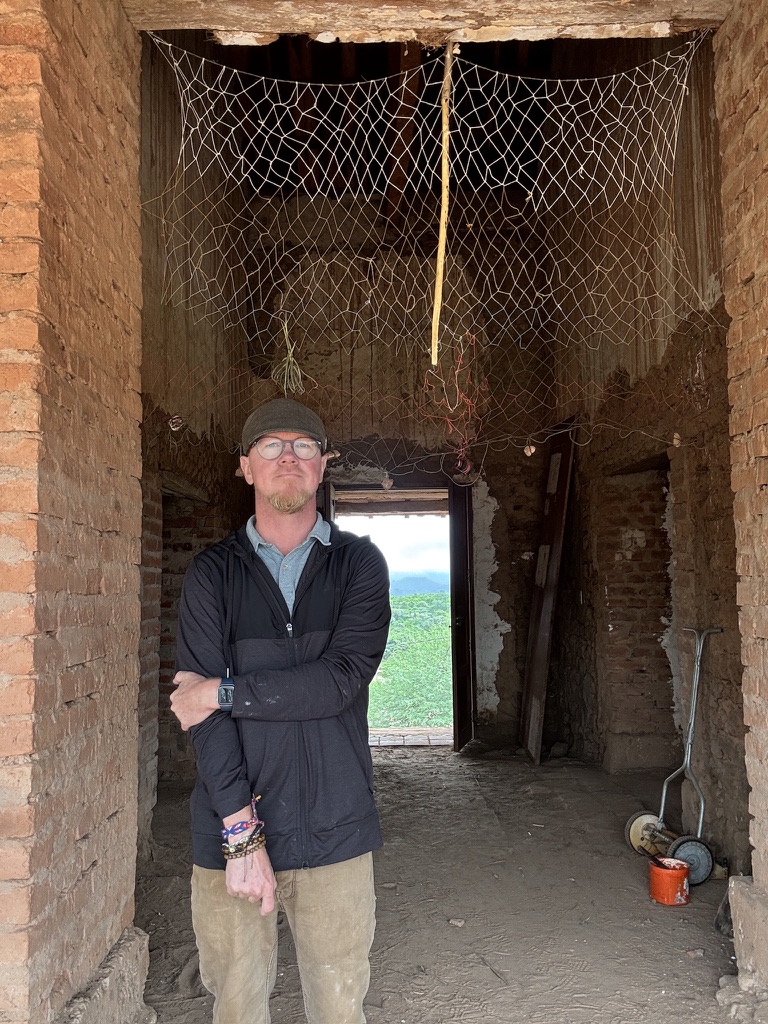
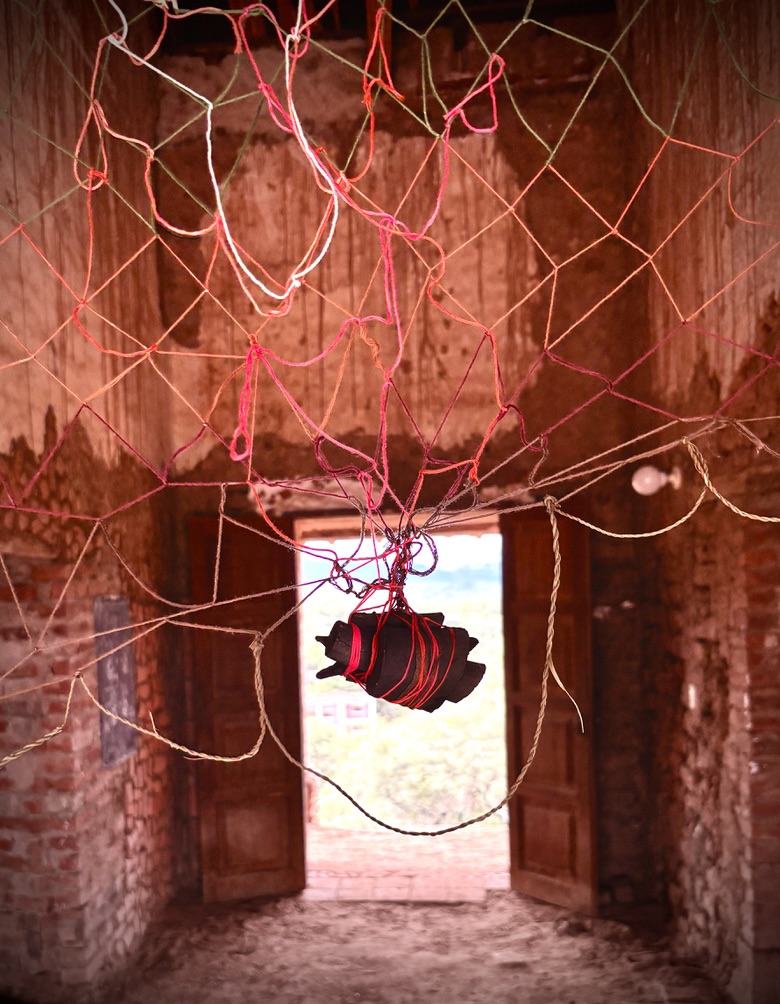
I used a variety of types of string and twine to make the net, including twine I made from cane leaves. I used different colours to represent different elements such as sky, land, and sea. I also tied in elements from the landscape such as rocks and some beef bones I charred to represent the sacrifice. I enjoy the irregular nature of how the net came out, it reads to me like a map or a journey, making the whole piece feel like a story itself. The stick in the middle represents the “well-shaped oar” for me, connecting Santa Rosa to Ancient Greece through the net.
The net culminates in the sacrifice at the bottom, a bundle of charred bones with loosely tied thread resembling a flickering flame when the breeze passes through.








 Asher Mains